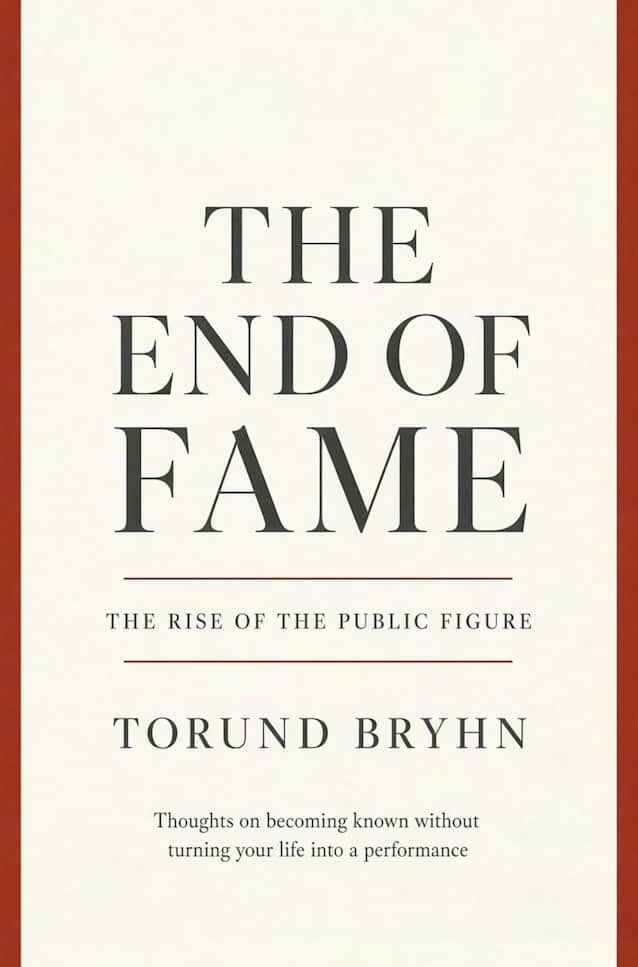
The End of Fame. The Rise of the Public Figure. : Thoughts on becoming known without turning your life into a performance.
About
Fame as we know it is dead.
For most of the last century, visibility was scarce. Editors, publishers, producers, political parties, studios, and institutions decided who entered public life. The rest of us could largely remain outside it.
The gatekeepers have lost their monopoly.
Visibility has been democratized.
The tools once reserved for people with access to a microphone, a television camera, or a printing press now belong to almost everyone. We carry them in our pockets.
At the same time, our identities have extended into the digital world.
Most of our work, our communities, our reputations, and the way we connect live online. A local business’ storefront is Instagram and Google Maps. Neighborhoods and friends organize events and connect on Facebook.
When you meet a new person, you connect on LinkedIn or Instagram, and a meeting that once happened around a conference table now happens on Zoom.
Work, friendship, commerce, and community now move between the physical and digital worlds as if they were one.
It is no longer realistic to opt out of being digital.
As a result, visibility is no longer exceptional. It is becoming the baseline.
And many of us were not raised for this.
We came of age in a world with clearer boundaries between public and private. Do good work. Protect your reputation. Do not call too much attention to yourself. Let someone else decide when it is your turn to step onto the stage.
Now the stage is everywhere.
So what are the rules?
For more than twenty years, strategist Torund Bryhn has worked behind the scenes with people in politics, business, and public life, helping them navigate visibility, reputation, influence, and the public self.
Years ago, she saw that something fundamental was changing. The machinery of recognition was moving away from institutions and into the hands of individuals.
She called it a fame revolution.
She was right that the world was changing.
She was wrong about what to call it.
What we are living through is larger and less settled than a revolution in fame. It is a transformation in how identity, work, reputation, technology, and public life meet. The old rules are disappearing faster than new ones are being written, and no one yet knows exactly where the change will take us.
“The End of Fame. The Rise of the Public Figure” is a course correction in the middle of that transition.
Bryhn argues that fame is not the destination. What is unfolding instead is a world in which more of us are becoming public figures: people whose work, ideas, reputations, relationships, and character are increasingly in the public eye.
AI is accelerating the shift. As machines take on more of the work, what remains distinctly ours becomes more valuable: our judgment, experience, ideas, and character.
AI is not making us celebrities.
AI is moving more of us into public figures.
And suddenly, we are being asked to lead.
To make our own choices, manage our own public identities, and take responsibility for words and ideas that can travel far beyond the room we are in.
The old prescriptions are disappearing. You can build an audience without permission, go viral without intending to, or find yourself at the center of public attention overnight.
How do we navigate that freedom and responsibility without becoming a performance?